 Business License

Common problems and thorough solutions for copper gaskets
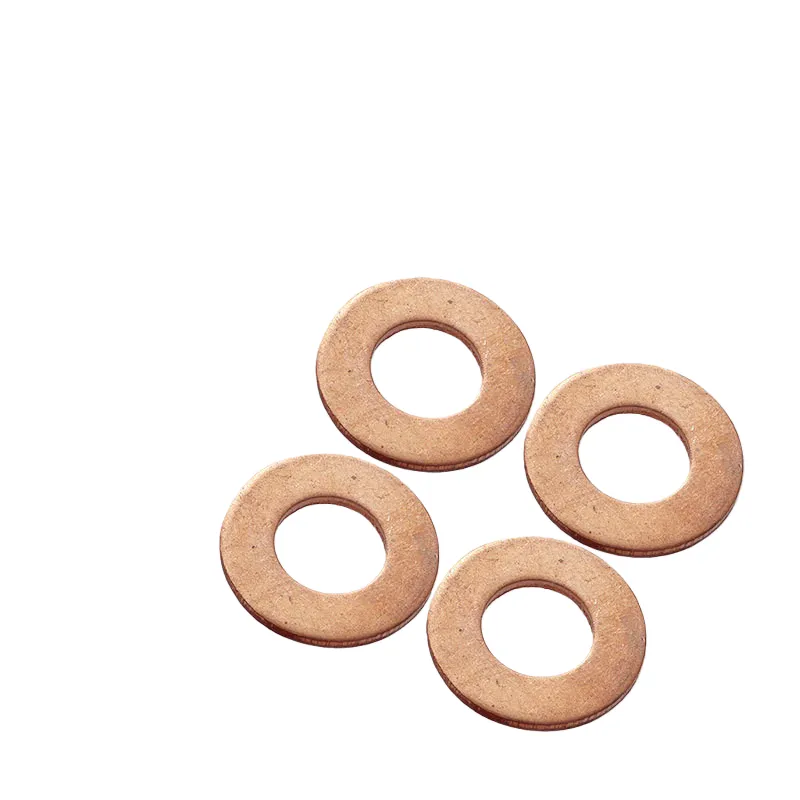
Copper gaskets (copper washers, pure copper sealing gaskets) are core components in industrial high-pressure and high-temperature sealing scenarios. With advantages as soft texture, good ductility, high temperature resistance, stable high-pressure sealing performance, and resistance to aging, they are widely used in fields such as hydraulic oil circuits, pneumatic equipment, pipelines, engines, instrument valves, and refrigeration equipment. Compared to rubber gaskets and silicone gaskets, the greatest advantages of copper gaskets are their high temperature resistance, high pressure resistance, aging resistance, making them suitable for harsh industrial working conditions. However, many equipment maintenance and procurement personnel often encounter problems such as oil and gas leaks after installation, failure after repeated use hardening and cracking at high temperatures, flattening without rebounding, and surface corrosion leading to leakage. Most people mistakenly believe these are product quality issues, but in fact, 90% sealing failures are caused by repeated use, improper installation, lack of heat treatment, inferior materials, and mismatched working conditions. Today, focusing on the top ten high-frequency failures copper gaskets in industrial sites, we will accurately deconstruct the root causes of these failures, share directly applicable solutions and prevention techniques, and help everyone thoroughly solve sealing failure problems, equipment rework and maintenance costs.
I. Most Common: Oil, gas, or water leakage and poor sealing after installation Fault symptoms: The bolts are tightened sufficiently, but the still leaks oil, gas, or water, resulting in slight pressure loss, inability to build up pressure, and unstable equipment operation. Core causes - Residual oil, iron filings, impurities or oxide scale on the sealing surface prevent the gasket from fitting tightly, creating microscopic gaps; - Fine scratches, bumps, or defects on the surface of the copper gasket compromise the integrity; - Uneven bolt tightening force, with one side too tight and the other loose, causing uneven pressure on the gasket; - Wear, deformation, or unevenness the equipment flange surface or interface plane. Solutions and prevention methods The sealing contact surface must be thoroughly cleaned before installation to remove oil, dust, iron filings, and old oxide layers check the surface integrity of the copper gasket, and replace it immediately if scratches or deformations are found; tighten bolts following the principle of diagonal cross-tightening and uniform pressure, applying steps to avoid uneven force on one side; if the equipment interface plane is deformed, grind and repair it or replace the parts promptly to ensure sealing fit from the source
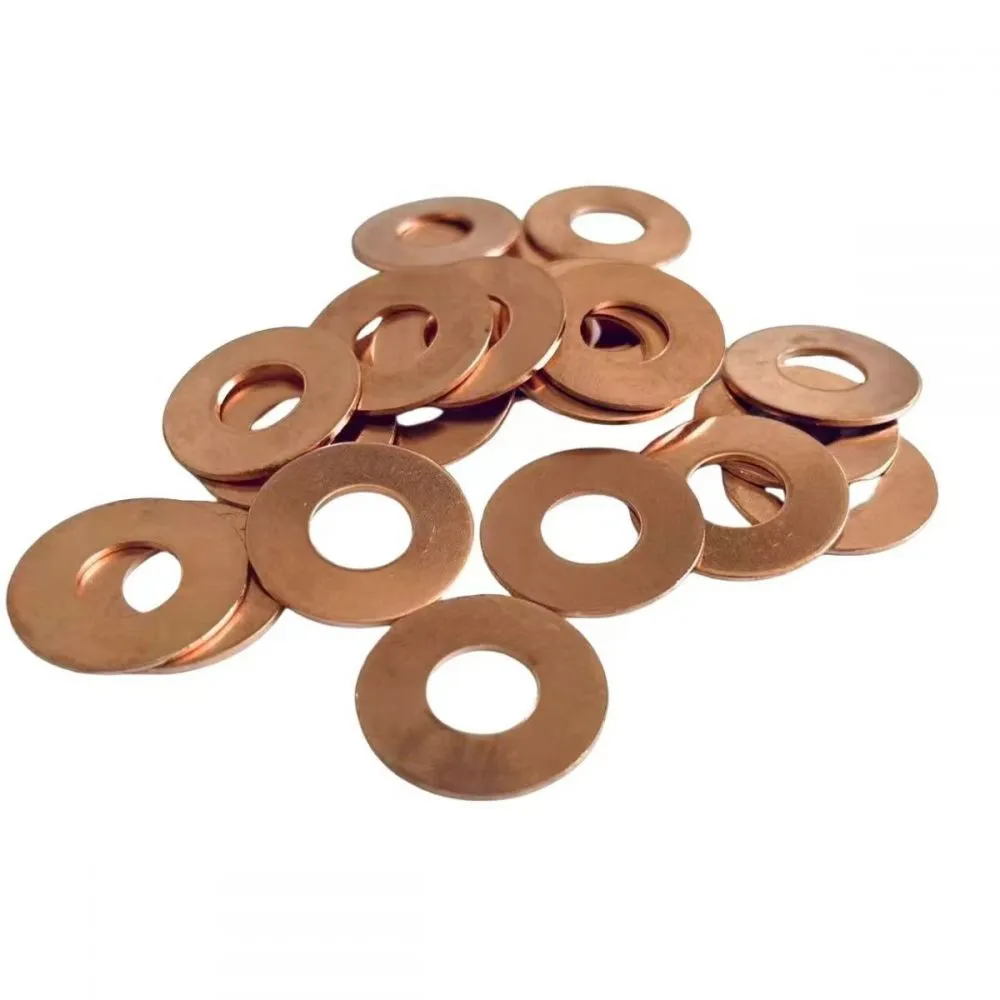
II. Common Pitfall: Reusing Copper Gaskets Leads to Leaks During Reinstallation Fault Phenomenon: After removing an old copper gasket reinstalling it, leaks and seal failure occur in a short period. Although it appears intact, it is actually completely unreliable. Core Reason: Copper gaskets rely on compressive deformation to gaps and achieve a seal, making them disposable sealing consumables. After the initial installation and pressure, they undergo plastic deformation, the metal lattice is compacted, and they lose their original ductility and resilience. Reinstalling them prevents them from re-sealing the mating surfaces, making them highly prone to rapid leakage under high-pressure and high-temperature conditions. and Prevention Strictly follow the "one-for-one replacement" principle. When performing equipment maintenance or interface disassembly, a brand-new copper gasket must be installed, and the of old gaskets must be resolutely prohibited. Replacing low-cost copper gaskets can effectively avoid high costs associated with high-pressure leaks, equipment failure, and downtime rework, making it most worry-free cost-reduction method in industrial operation and maintenance.
III. High-temperature working conditions: Copper gaskets harden, become brittle, crack, and lose sealing performance Failure phenomenon: After longterm high-temperature operation, the copper gasket hardens and loses toughness, easily breaks after disassembly, and develops fine surface cracks; the failure is more severe under alternating hot and cold working. Core reasons: Long-term high-temperature pressure on copper material causes work hardening, significantly reducing metal ductility and making the material brittle; frequent hot and cold cycles and equipment-stop operations accelerate gasket fatigue and generate stress cracks; unannealed hard-state copper gaskets have extremely poor high-temperature deformation resistance. Solutions and prevention methods For hightemperature, high-pressure, and alternating hot and cold working conditions, annealed soft-state copper gaskets (with high-temperature tempering treatment) must be selected, as they are soft, ductile, and have good fatigue resistance; ordinary hard-state copper gaskets are only suitable for static sealing at normal temperature and low pressure; regularly inspect and replace gaskets in high-temperature working conditions leakage accidents caused by hardening and cracking.
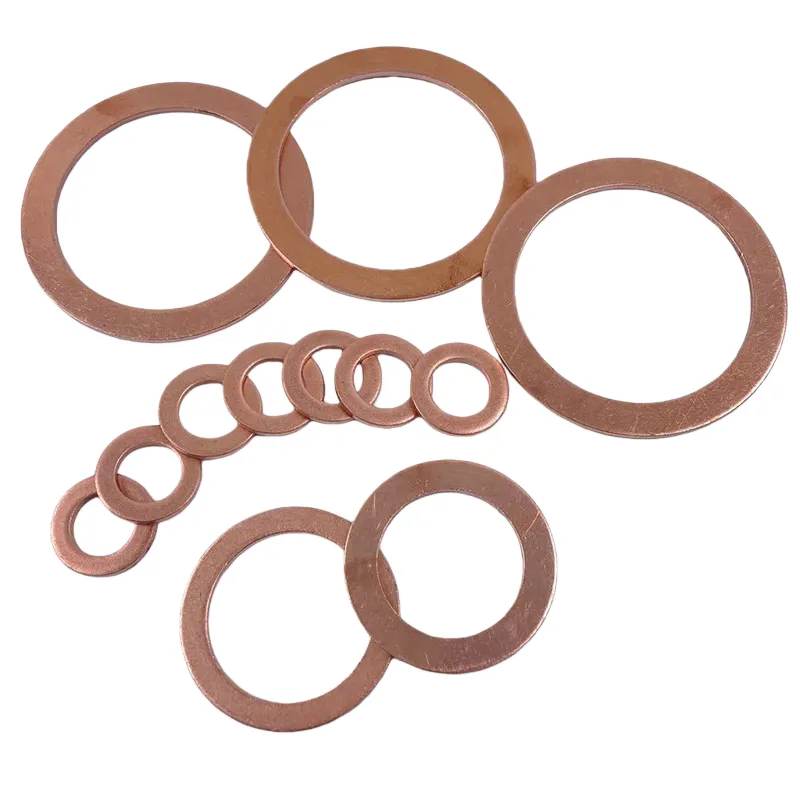
IV. Installation errors: Gaskets are over-compressed and thinned, leading to loss of springback Failure phenomenon: After installation, copper gasket is severely flattened with a significant reduction in thickness and no springback margin, leading to rapid pressure loss and leakage after equipment vibration during operation. Core reasons: Excessive bolt tightening torque and-time locking cause excessive compression and deformation of the gasket; selecting gaskets that are too thin results in insufficient load-bearing capacity for high-pressure working conditions. Solutions and prevention methodsMatch the corresponding thickness of the copper gasket to the equipment pressure, and select thickened models for high-pressure working conditions; tighten uniformly in stages during installation, and prohibit violent onetime locking; strictly control the tightening torque, ensuring a reasonable deformation margin while guaranteeing a tight seal to avoid permanent deformation and loss of springback caused by over-compression
V. Material Pitfalls: Low-priced mixed copper gaskets and recycled copper gaskets have poor sealing and are prone to corrosion. Failureon: Newly purchased copper gaskets are dark, yellowish-red, and easily oxidize, pit, and leak after use, with extremely poor durability. Core Reason: Most low- gaskets on the market are made of recycled mixed copper or alloy copper with less than 99% copper content, mixed with impurities such as iron, lead, and zinc. The is loose, has poor ductility, and weak corrosion resistance, failing to meet the sealing standards of pure copper. They are highly prone to failure in high-pressure and high-temperature environments. Solutions Prevention: Identify T2 pure copper gaskets; high-purity materials have a bright color, uniform texture, and excellent ductility. During procurement, initial screening can be done via appearance and (pure copper is non-magnetic); if necessary, require the manufacturer to provide a material test report. Firmly avoid low-priced recycled mixed copper gaskets to ensure sealing stability the source.
VII. Dimensional Deviation: Gasket too large or too small, inner diameter mismatch, sealing misalignment Failure Phenomenon: Gasket inner diameter too to fit over the bolt, outer diameter too large protruding from the interface, installation offset, eccentric loading, rapid leakage after operation. Core Reason: Crude production processes in small factories poor stamping precision, thickness and inner/outer diameter tolerances exceeding standards; non-standard dimensions cut arbitrarily, irregular edges, large dimensional deviations. Solutions and Prevention Precisely verify diameter and flange groove dimensions during procurement, match with standard specification copper gaskets; for high-precision sealing scenarios, select precision-stamped burr-free gaskets, eliminate non- deviation products, and ensure tight installation and centered loading.
VIII. Adding grease during installation actually exacerbates sealing failure Failure Phenomenon: Applying grease or machine oil for easier installation in no leakage in the short term, but seepage and loosening of the seal occur after a period of operation. Core Reason: Grease retains hard particles and impurities, which embed into the gasket surface under pressure, forming microscopic gaps; meanwhile, the grease reduces the frictional fit between the gasket and the sealing surface, making it prone to loosening and pressure release after equipment vibration Solutions and Prevention Prohibit applying lubricating grease during copper gasket installation; keep the gasket and sealing surface clean and dry. The pure copper material has sufficient ductility to achieve a seal without auxiliary lubrication.
IX. Pressure relief and leakage after equipment warm-up, normal when cold Fault phenomenon: The equipment seal is normal room temperature, but slight air or oil leakage occurs after temperature rise during operation, and returns to normal after shutdown and cooling. Core reasons: Difference in thermal expansion coefficients; inconsistent of bolts, flanges, and gaskets at high temperatures, leading to attenuation of preload; unannealed hard copper gaskets have poor thermal stability and insufficient deformation fit at high temperatures. and prevention methods After the first high-temperature operation of a new gasket, perform a secondary tightening after shutdown to compensate for the thermal deformation gap; uniformly use annealed soft- copper gaskets for high-temperature working conditions to improve thermal stability and deformation fit.
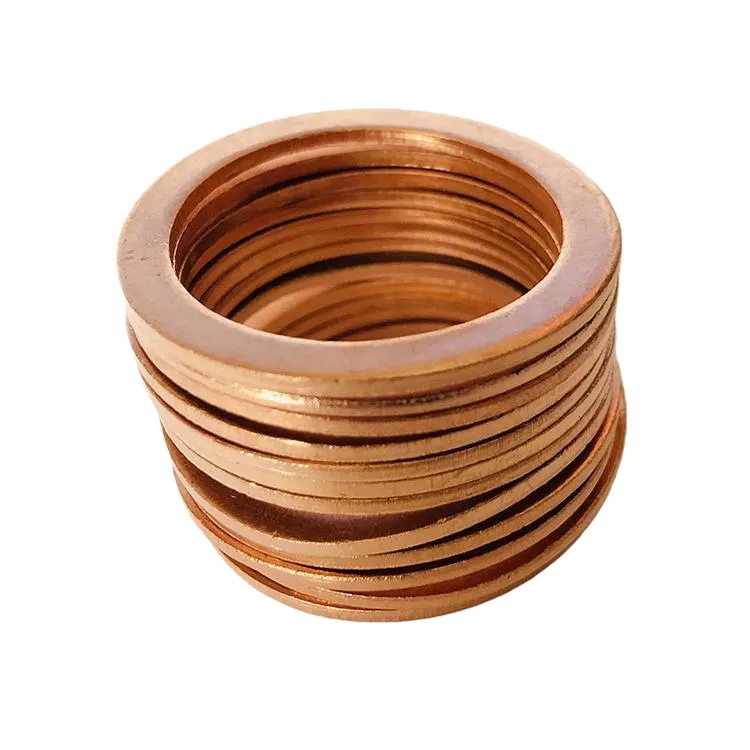
X. Deformation, warping, and scrapping due to improper storage Fault phenomenon: New gaskets bend warp, deform, or become uneven after being stored for a period of time, making it impossible to fit flatly against the sealing surface. Core reasons: Heavy pressure from stacking bending during storage, and random placement; copper is soft and easily deformed by external forces; humid environments accelerate oxidation, affecting performance. Solutions and prevention methods Store copper gaskets flat by category, avoiding heavy pressure, bending, and excessive stacking; keep the storage environment dry and ventilated, and ensure dust and moisture protection; slightly deformed gaskets can be flattened and corrected but severely warped or deformed ones should be replaced directly without compromise.
Summary of pitfalls in using copper gaskets: The core root of 90% of faults 1. Cognitive misconception: Reusing old copper gaskets loses their plastic sealing capability, inevitably leading to leaks; 2. Selection error: Using hard-state copper gaskets for high temperature and high pressure, are prone to hardening, cracking, and poor thermal stability; 3. Improper installation: Uneven force, residual debris, applying grease, and excessive torque; 4. Poor quality: Recycled copper with low purity and many impurities has extremely poor corrosion resistance and sealing performance. To ensure stable sealing and a qualified service life for copper gaskets, simply adhere the five principles: select pure annealed soft-state materials, replace one-for-one upon disassembly, install cleanly, tighten uniformly, and store properly. This will completely solve all problems such as oil/air leakage, hardening, cracking, and corrosion, significantly reducing equipment maintenance failures and costs.
Recently Posted
-
O-ring: The "Invisible Contract" of Industrial Sealing and the Philosophy of Working Conditions
August 7, 2026In the vast and complex system of industrial equipment, people often marvel at the meshing of precision gears or the pressurebeari Read More
 -
Nano-aerogel felt: "Super insulation" breaking thermodynamic limits and industrial reshaping
August 7, 2026Under the grand narrative of the global energy structure transition and the "dual carbon" goals, energy conservation and Read More
 -
Aluminum Gaskets: The "Flexible Contract" in Industrial Connections
August 5, 2026In industrial systems such as mechanical manufacturing, petrochemicals, electronics, and aerospace, aluminum gaskets/washers, as f Read More
 -
Qingke Paper: The "Paper Armor" and Insulation Philosophy in the Electronics and New Energy Sectors
August 5, 2026Inside new energy batteries, precision motors, and various electronic and electrical devices, countless tiny components are hidden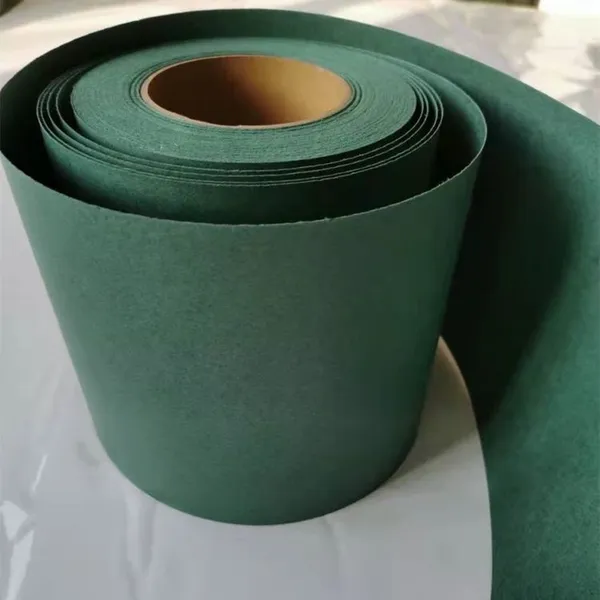 Read More

Contact Us
Recommended Products
-
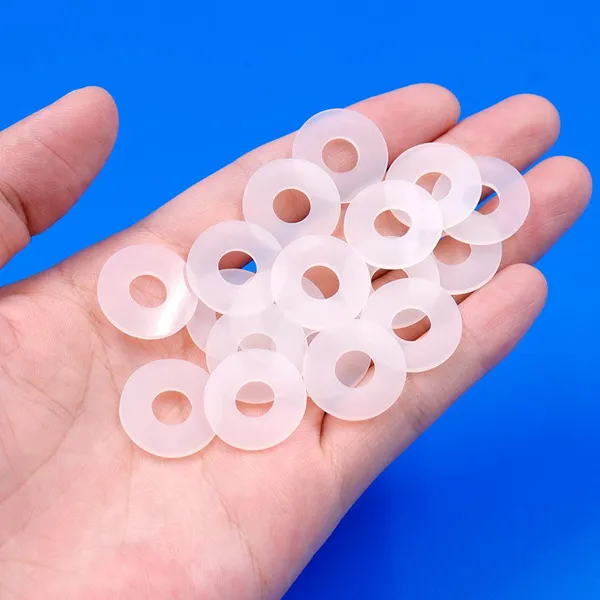
 Colored Silicone Flat Washer FF Full Surface With Water Line Silicone Pad High Temperature Resistant 230℃ Valve Pipe Sealing GasketNegotiableMOQ: 100 Blades
 -
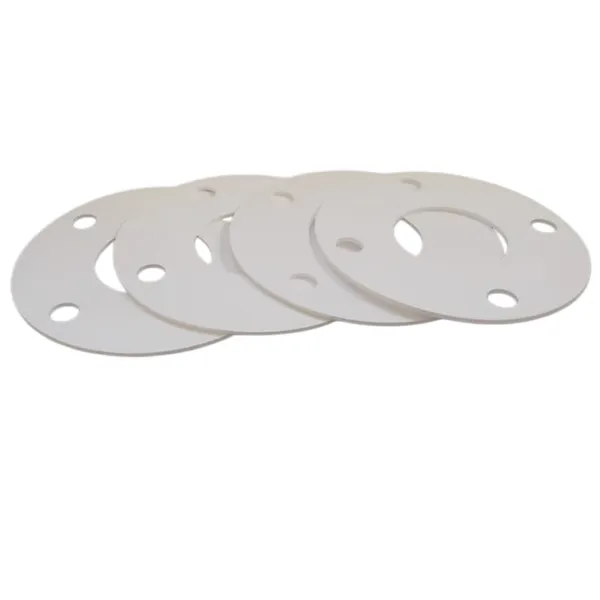
PTFE Gasket With Holes, National Standard Flange Multi-hole PTFE Sealing GasketNegotiableMOQ: 100 Blades
-
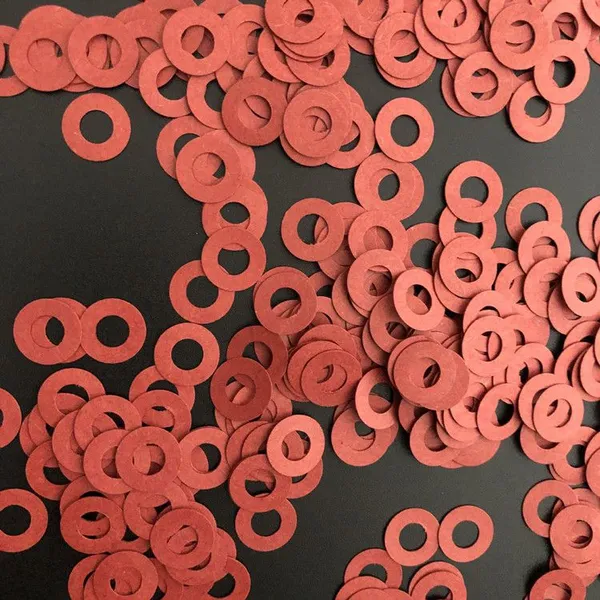
Red Steel Paper Gasket Insulation Flat Washer Red Mica Quick Connector Paper WasherNegotiableMOQ: 100 Blades
-
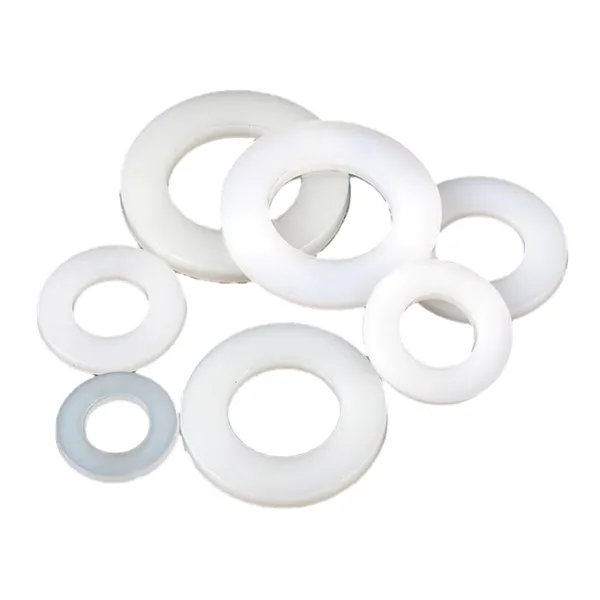
Nylon Washer Black Plastic Flat Washer Insulating Shock-absorbing Wear-resistant Self-lubricatingNegotiableMOQ: 100 Blades
-
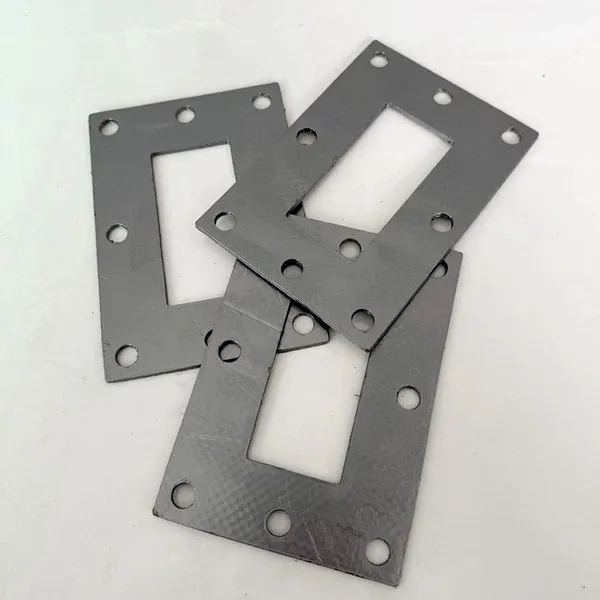
Perforated Graphite Composite Gasket 304 Stainless Steel Reinforced High Temperature and High Pressure Flange Gasket Boiler SteamNegotiableMOQ: 100 Blades
-
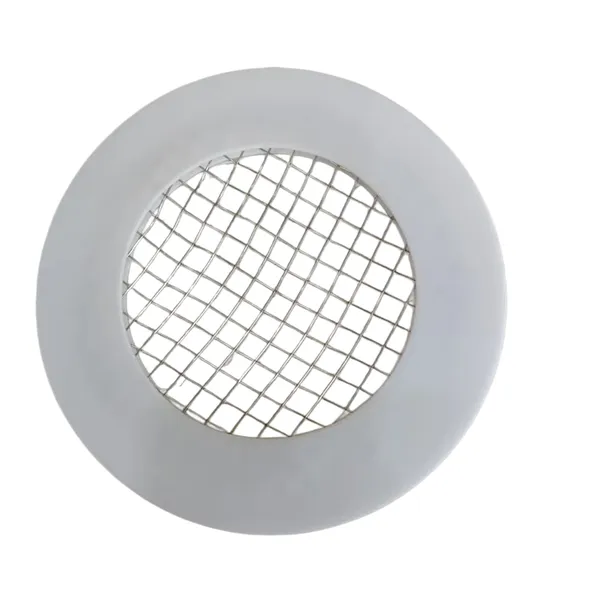
PTFE Filter Gasket With Stainless Steel Mesh; PTFE Filter Sealing Gasket With Stainless Steel MeshNegotiableMOQ: 100 Blades
-
Metal Reinforced PTFE PTFE Gasket Chemical Corrosion Resistant GasketNegotiableMOQ: 100 Blades
-
Reinforced Metal Winding Gasket 304 Stainless Steel Flange Sealing GasketNegotiableMOQ: 100 Blades
-
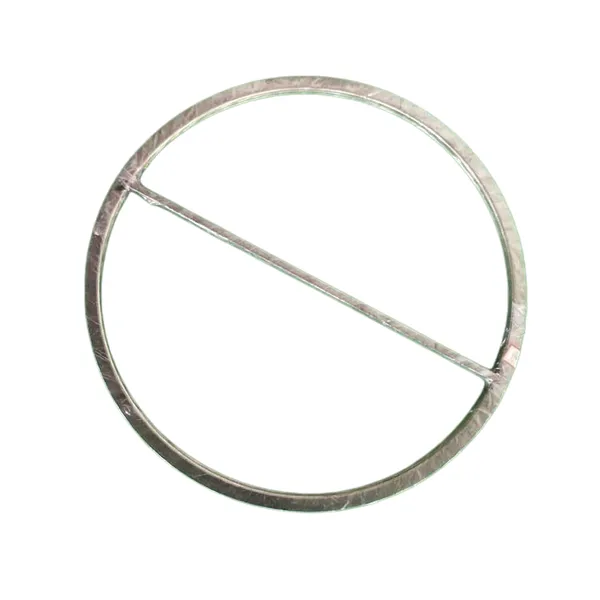
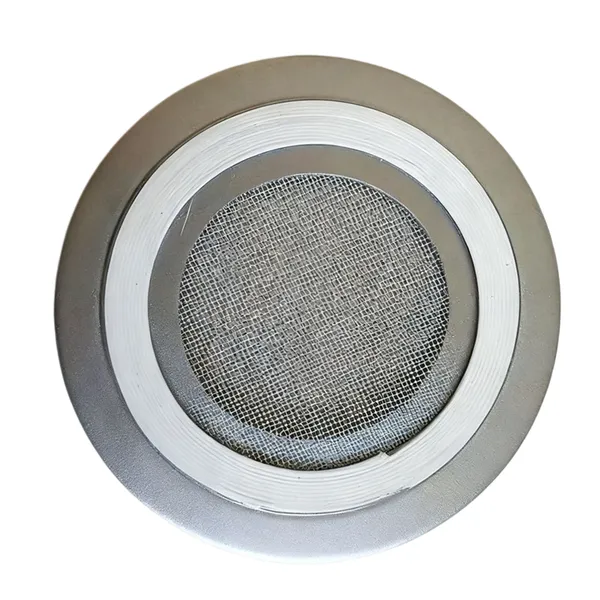
Filter Mesh Winding Gasket 304 Stainless Steel Inner and Outer Ring GasketNegotiableMOQ: 100 Blades
-
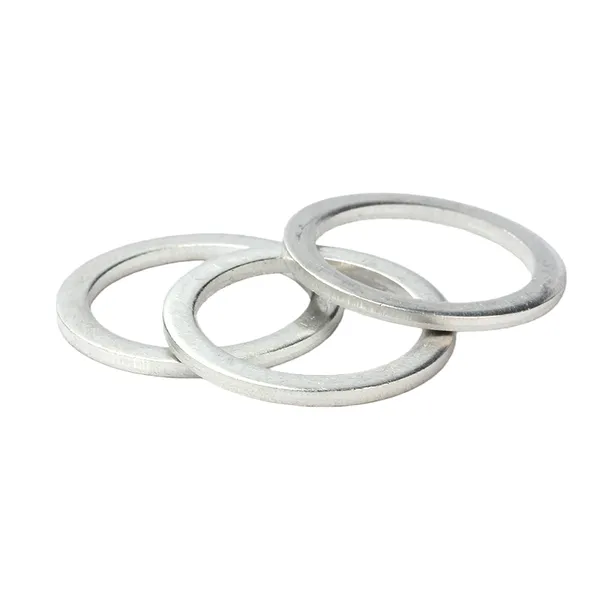
Pure Aluminum Gasket Soft Aluminum Flat Washer 0.1-3mm High Temperature Resistant Sealing Aluminum WasherNegotiableMOQ: 100 Blades
-
Metal Octagonal Ring Gasket Oval Gasket 304/316L Stainless Steel Metal Ring Gasket RJ Flange GasketNegotiableMOQ: 100 Blades
-
Basic Metal Spiral Wound Gasket 304 Graphite Spiral Wound Gasket Tongue and Groove FlangeNegotiableMOQ: 100 Blades
-
Metal Graphite Spiral Wound Gasket High Temperature Flange Pipe Sealing GasketNegotiableMOQ: 50 Blades
-
Stainless Steel Flexible Graphite Corrugated Composite Gasket Irregular Thick Reinforced High Temperature and High Pressure Sealing GasketNegotiableMOQ: 100 Blades
-
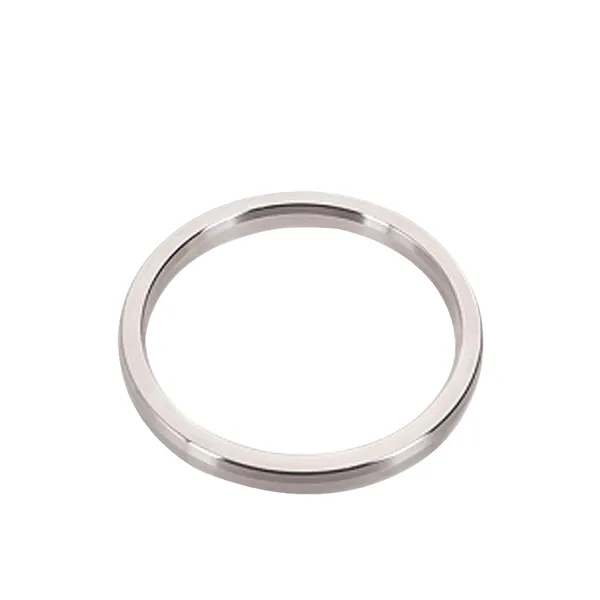
304 Stainless Steel Oval Metal Ring Gasket RJ Flange Oval Gasket High Pressure and High Temperature Resistant Sealing WasherNegotiableMOQ: 10 Units
-
PTFE Gasket, Polytetrafluoroethylene Sealing Gasket, White Teflon Flat Gasket, High Temperature and Acid/alkali Resistant Industrial Flange WasherNegotiableMOQ: 25 Units
-
Elastic Expanded PTFE Gasket Soft Teflon Gasket Pipe Flange Sealing Gasket High and Low Temperature Corrosion Resistant Ready Stock Custom MadeNegotiableMOQ: 25 Units
-
Metal Lens Gasket, No-hole and With-hole Lens Gasket, High-pressure Angle Valve Hydrogen Pipeline Flange Sealing Gasket Custom-madeNegotiableMOQ: 25 Units
-
Metal Serrated Gasket | Wave Profile Composite Gasket for High Temperature and High Pressure Flange SealingNegotiableMOQ: 100 Blades
-
High Temperature and High Pressure Octagonal Ring Joint Gasket Oval Flange Gasket Carbon Steel 304 316 Stainless SteelNegotiableMOQ: 1 Unit